
SR-22 vs. SR-26
Key takeaways
- An SR-26 is the insurer's notice to the state that your coverage has ended.
- It usually leads to a new suspension unless a new SR-22 replaces it.
- Switching carriers is safe if the new SR-22 is filed before the old policy ends.
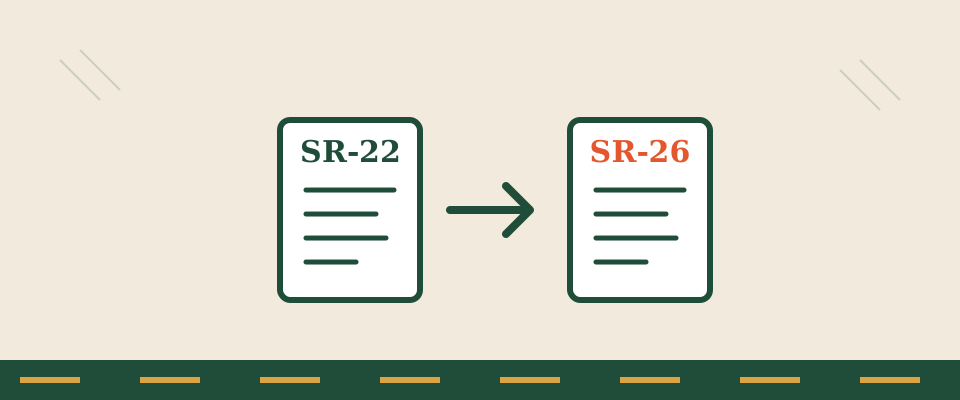
If the SR-22 is the "on" switch, the SR-26 is the "off" switch. Insurers are required to file it when an SR-22 policy cancels or isn't renewed.
What triggers an SR-26
- A missed payment that leads to cancellation
- Canceling the policy yourself
- Non-renewal by the insurer
- Switching insurers, if the new filing doesn't arrive first
What happens after the SR-26
The state typically issues a suspension notice. In many states, the required SR-22 period also starts over.
How to avoid one
- Use autopay.
- Never cancel before the DMV confirms that your requirement has ended.
- When switching, have the new SR-22 filed first.
SR-26 questions
Will I be told before the SR-26 is filed?
Usually you'll receive a cancellation notice from the insurer. Act on it immediately.